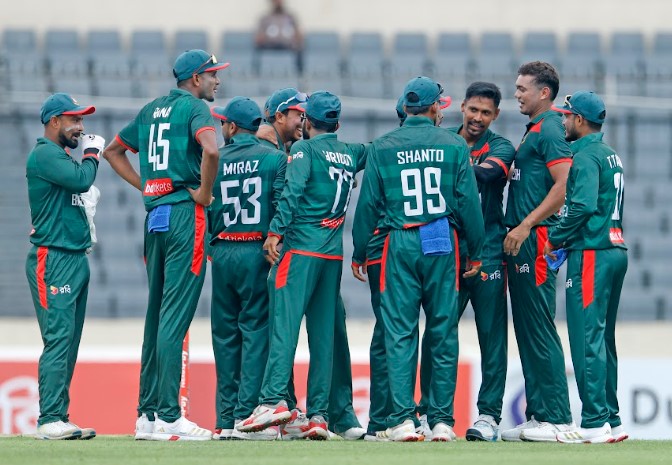
Bangladesh suffered a heavy defeat against Australia in the Mackay Test, losing by an innings and 51 runs as the match ended shortly after the tea break on the second day. The Tigers failed to cross the 100-run mark in either innings, with their batting struggles ultimately costing them the match.
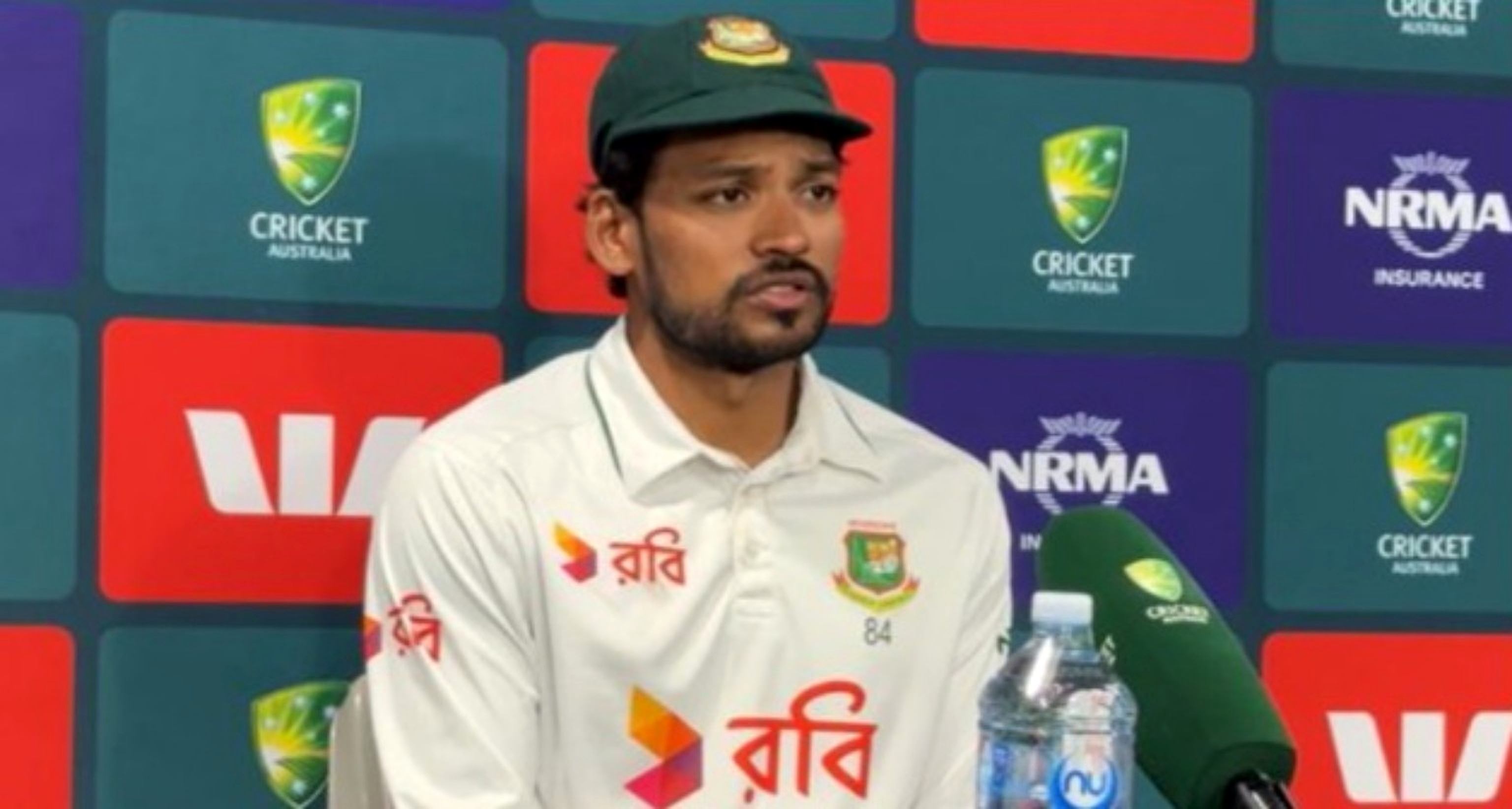 Najmul Hossain Shanto at the press conference after the Mackay Test. Despite the disappointing finish, Bangladesh’s tour of Australia was a mixed one. After securing a historic nine-wicket victory in Darwin, the Tigers were thoroughly outplayed in Mackay. Before the tour, even one victory in Australian conditions would have been considered a major achievement. Having achieved that feat, Bangladesh can still look back on the tour with some satisfaction.
The series also marked Bangladesh’s first bilateral tour of Australia in 23 years. Although several series had been planned during that period, they failed to materialise for various reasons. Most of Bangladesh’s current players had little or no experience of playing in Australian conditions, making the tour a significant challenge.
Following the defeat in Mackay, Bangladesh captain Najmul Hossain Shanto called for more regular tours to Australia, insisting that the experience would be crucial for the team’s development.
“It’s not the first time a match has finished in two days. It has happened here many times before, with matches ending in two or three days. These things can happen. As a team, we have to be consistent if we want to move forward. We need to improve our batting because the bowlers have been doing well. We have to learn how to play better cricket and use these experiences to move forward,” Shanto said at the post-match press conference.
Asked what Bangladesh had learned from the tour, Shanto highlighted the challenge posed by pace and bounce.
“We learned a lot. The pace and bounce were a big challenge, and this experience will definitely help us. Their bowling attack was world-class, and we will try to improve. This experience will help us in South Africa at the World Cup as well,” he said.
Shanto pointed out that Bangladesh had returned to Australia after a 23-year gap, while around 90 percent of the squad had never played there before.
“It is not easy to come here after so many years and face a bowling attack like this. If we could come here regularly, our players would adapt and play better cricket. Around 90 percent of our players had never played here before, so they didn’t know how to adapt to these conditions or how to handle this kind of bowling attack. We want to play regularly in these conditions—not once every 23 or 25 years.”
Addressing Bangladesh’s poor batting in the second innings, Shanto admitted that the team could have performed much better.
“The wicket was certainly difficult. We have to accept that. But there were also some poor shots. I don’t want to point fingers at anyone. As a team, we didn’t bat well. I got set and then got out in a way that I cannot accept. I should have batted longer. Everyone tried hard, but we simply don’t play against this kind of bowling attack in these conditions. So I don’t think it would be right to single out any batter. The important thing is to use this experience and make sure we don’t repeat these mistakes.”
Shanto also rejected the suggestion that Bangladesh had been too casual in Mackay.
“We were not casual. It was very disappointing batting. We didn’t bat well. It is very difficult to come here after so many years and face this kind of bowling in these conditions. We are not making excuses. Even teams that play here regularly can collapse. We played badly, and the conditions were certainly difficult. Everyone tried, and we could have played better cricket.”
Bangladesh’s historic victory in Darwin had raised expectations ahead of the second Test, but Shanto remained unconcerned about individual players who struggled in Mackay.
“Expectations are always there. Mominul bhai has been very consistent, but these things can happen. That’s how Tamim plays—when he gets going, he has a big impact. I’m not worried at all. Hasan has been bowling really well with the red ball, and one match like this can happen. We have to make sure we learn from this experience and don’t forget these mistakes. That should be our main focus.”
The captain also praised Mitchell Starc, who claimed 10 wickets in the match and played a major role in Bangladesh’s collapse.
“It was certainly difficult, and we knew that beforehand. I really enjoyed it. I wanted to face this kind of bowling and score big runs. We usually watch it on television, so experiencing it was special. It was a big challenge, but I believe our batting would improve if we could regularly play against bowling of this quality. Not just me—everyone enjoyed the experience of facing such a bowling attack.”
Shanto also acknowledged the importance of the toss and the difficulty of batting throughout the match, while refusing to use conditions as an excuse.
“The toss was a big factor. It was difficult to bat in the first innings, and batting was difficult in three of the innings. But we don’t want to make excuses. We batted poorly, while they bowled very well. We have a lot to improve technically.”
Despite the defeat, Bangladesh’s 1-1 series draw represents a significant result. The Tigers produced a dominant nine-wicket victory in Darwin and competed in conditions where teams from the subcontinent have traditionally struggled. India, for example, lost their most recent Test series in Australia 3-1, while England suffered a 4-1 Ashes defeat.
For Shanto, that makes a stronger case for Bangladesh to be invited back more often.
“We should definitely come here. Teams from the subcontinent generally don’t play very well in these conditions. We came here after so many years and achieved this result. We should certainly be invited back. If we come regularly, we will understand these conditions better, take on the challenges and, InshaAllah, play good cricket.”
The two-Test series ended 1-1, leaving Bangladesh with both a historic victory and a painful lesson from Mackay. Shanto believes the experience of the tour can ultimately help the team grow.
When asked what he would do with the remaining three days after a five-day Test ended in just two, Shanto responded with a smile: “Sleep. What’s the problem?”